
The Complete Guide to Data Centers in Georgia: Directory, Grid Economics, and Hydrology

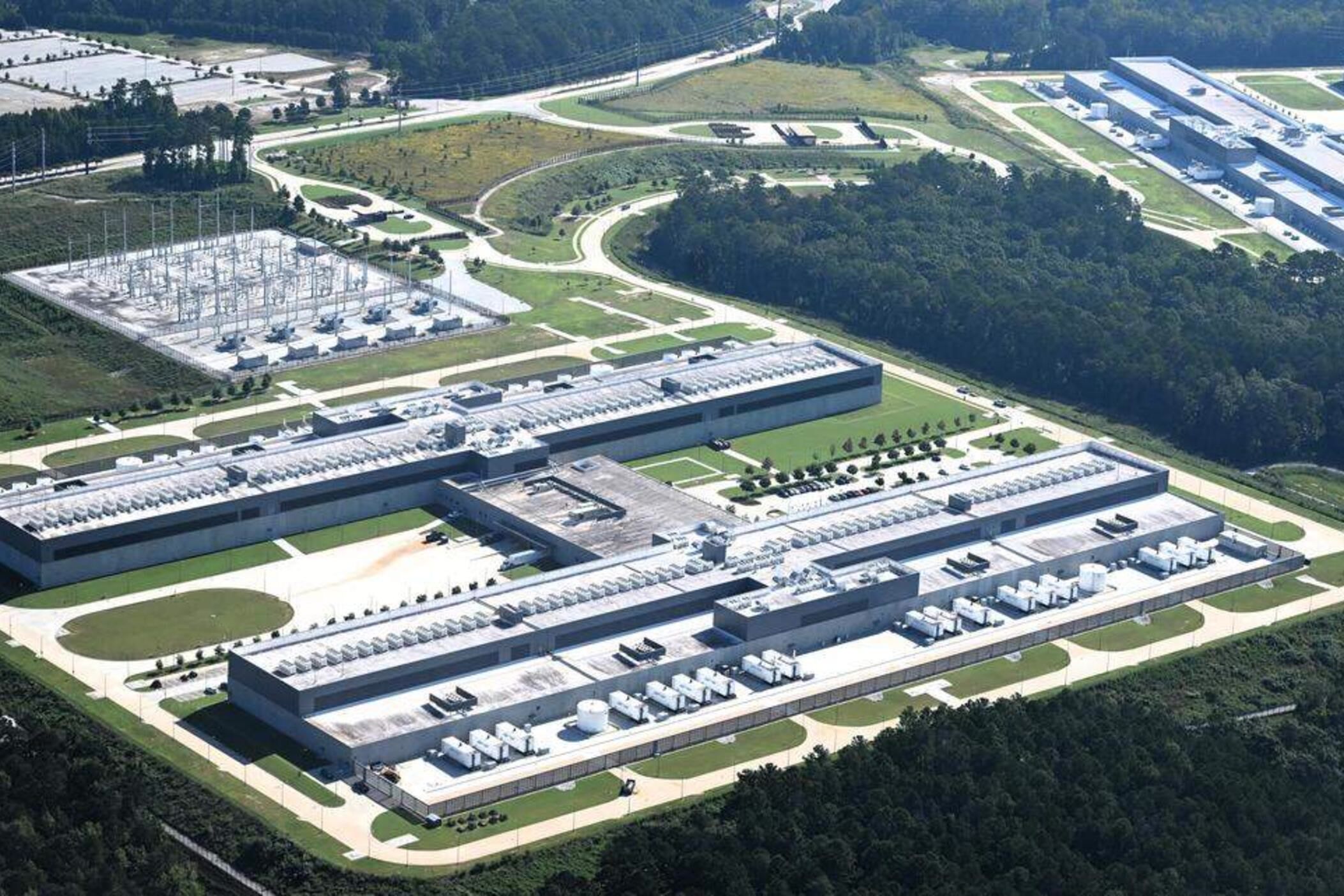
The state of Georgia is undergoing a rapid transformation from a regional telecommunications hub into a global epicenter for hyperscale computing and artificial intelligence (AI) infrastructure. Driven by historical tax incentives, robust fiber-optic topography, and perceptions of abundant power, developers have flooded the state.
Currently, Georgia hosts 43 operational data center facilities representing a combined load capacity of 2,968 megawatts (MW). However, this footprint is dwarfed by the state development pipeline, which contains 134 planned or under-construction projects projected to add an unprecedented 16,316 MW of additional electrical capacity.
This guide provides an exhaustive directory of active and proposed data center campuses across Georgia and evaluates the macroeconomic, legislative, and hydrological impacts on rural communities and utility ratepayers.
Comprehensive Directory of Georgia Data Center Campuses
The geographical footprint of data centers in Georgia is shifting rapidly. Historically clustered around Metro Atlanta (Fulton, Gwinnett, and Douglas counties), developers are increasingly targeting exurban and rural counties like Bartow, Coweta, Early, and Effingham to secure the multi-hundred-acre footprints required for modern AI computing clusters.
| County & City | Developer / Operator | Est. Investment | Power Demand | Utility / EMC |
|---|---|---|---|---|
| Effingham County | OpenAI / SoftBank | ~$20.0 Billion | 3.2 GW (3,200 MW) | Georgia Power |
| Bartow County (Stilesboro) | Digital Realty / Taurus DC | ~$19.0 Billion | 1,830 MW | Georgia Power |
| Early County | QTS Data Centers | Undisclosed | 1,400 MW | Undisclosed |
| Clayton County | Stillwater Development | Undisclosed | 1,250 MW | Undisclosed |
| Irwin County | Premier Data Centers | Undisclosed | 1,250 MW | Undisclosed |
| Coweta County (Sargent) | Prologis / Atlas Development | ~$17.0 Billion | 900 MW | Georgia Power / Local EMC |
| Twiggs County | Eagle Rock Partners | Undisclosed | 900 MW | Undisclosed |
| Coweta County | Prologis / Atlas Development | Undisclosed | 700 MW | Undisclosed |
| Newton County | TPA Group | Undisclosed | 600 MW | Georgia Power |
| Floyd County | Atlas Development | Undisclosed | 504 MW | Undisclosed |
| Multiple Locations | CloudHQ Georgia | Undisclosed | 482 MW | Undisclosed |
| Walton County (Social Circle) | Undisclosed Hyperscaler | Undisclosed | 400 MW | Walton EMC |
| Fulton County (Atlanta) | Cloudflare | Undisclosed | 324 MW | Georgia Power |
| Rockdale County (Conyers) | DC BLOX | $1.176 Billion | 216 MW | Georgia Power |
| Fulton County (South Fulton) | T5 Data Centers | Undisclosed | 200 MW | Georgia Power |
| Richmond County | QTS Data Centers | Undisclosed | 200 MW | Georgia Power |
| Newton / Morgan County | Meta (Facebook) | $1.50 Billion+ | 200 MW | Georgia Power |
| Whitfield County (Dalton) | Core Scientific | ~$1.60 Billion | 195 MW | Undisclosed |
| Douglas County (Douglasville) | Vantage Data Centers | $1.50 Billion | 176 MW | Georgia Power / Greystone EMC |
| Fulton County (Atlanta) | Edged Energy | Undisclosed | 168 MW | Georgia Power |
| Douglas County (Lithia Springs) | DC BLOX | $1.15 Billion | 120 MW | Greystone Power |
| Douglas County (Lithia Springs) | Switch | $2.50 Billion | Undisclosed | Greystone Power / GA Power |
| Douglas County (Douglasville) | Microsoft | Undisclosed | Undisclosed | Georgia Power / Greystone EMC |
| Fulton County (Palmetto) | Microsoft | $420 Million+ | Undisclosed | Georgia Power |
| Douglas County (Douglasville) | CyrusOne | $200 Million | Undisclosed | Undisclosed |
| Columbia County (Appling) | Undisclosed | Undisclosed | Georgia Power | |
| Troup County (LaGrange) | Undisclosed | Undisclosed | Georgia Power |
Power Grid Economics and the Ratepayer Burden
The proliferation of hyperscale data centers has forced utility operators and state regulators to rapidly recalibrate electrical load forecasting models.
1. The Load Forecasting Escalation
In its 2022 Integrated Resource Plan (IRP), Georgia Power projected a manageable winter peak growth of approximately 400 MW through 2031. By late 2023, that forecast exploded to nearly 6,000 MW of new load growth, driven almost entirely by data centers.
To address this capacity deficit, the Georgia Public Service Commission (PSC) approved proceedings under Docket No. 56002 and Docket No. 55378, ultimately authorizing Georgia Power to procure up to 9,885 MW of new capacity by December 2025, designated primarily for large data center customers.
| Regulatory Filing / Docket | Date | Forecasted Load Growth | Primary Driver Cited |
|---|---|---|---|
| 2022 Integrated Resource Plan | 2022 | ~400 MW through 2031 | Standard population and business growth |
| 2023 IRP Update | Late 2023 | ~6,000 MW | Data center buildout |
| Out-of-Cycle All-Source RFP | April 2024 | 2,000 MW to 6,000 MW | Critical capacity deficit for 2032-2033 |
| 2025 IRP (Docket 56002) | July 2025 | 6,000 MW to 8,500 MW | Large-load economic development |
| 2025 Stipulated Agreement | Dec 2025 | Up to 9,885 MW | Hyperscale data center capacity contracts |
2. The OpenAI 1-Gigawatt Virtual Power Plant Clause
In August 2026, the PSC approved a 25-year contract for Georgia Power to serve OpenAI’s 3.2 GW campus in Effingham County. A central operational mechanism in this agreement is OpenAI’s commitment to provide up to 1,000 MW (1 GW) of “flexible demand response”.
During extreme summer heatwaves or winter freezes, Georgia Power holds contractual authority to throttle or shed up to 1 GW of computational load from the OpenAI campus, functioning as a massive industrial Virtual Power Plant to protect grid stability.
(For a deep dive into how Project Camellia specifically impacts local power bills, groundwater access, and rural economic development across Tattnall, Evans, Appling, and Jeff Davis counties, read our companion analysis: They’ve Made It to Our Back Door: What AI Data Centers Mean for District 157).
3. Wholesale Power Economics for Rural EMCs
While Georgia Power manages large investor-owned accounts, Georgia’s 41 Electric Membership Corporations (EMCs), serving 4.4 million residents in rural and suburban areas, face distinct financial pressures.
Co-ops such as Canoochee EMC, Satilla REMC, and Altamaha EMC purchase wholesale power through Oglethorpe Power Corporation (OPC) under take-or-pay contracts that extend through 2085. Because data centers operate 24/7 at high load factors, they raise the state’s baseline grid demand.
To meet this elevated demand, Oglethorpe is deploying billions in new capital, including a planned $1.8B to $2.3B natural gas facility (1,425 MW) in Monroe County and a $360M combustion turbine unit at the Talbot Energy Facility. Debt service and operational costs for these generation additions pass directly through to rural EMCs, applying upward pressure on residential electric bills across Georgia (where the average household pays $149/month at 16.36¢/kWh).
4. Recent State Legislative Battles
The 2024–2026 Georgia legislative sessions featured intense debates regarding data center incentives and ratepayer safeguards:
- House Bill 1063: Attempted to codify statutory ratepayer protections to ensure residential customers do not absorb transmission and generation costs for data center buildouts. The bill died in the Senate before adjournment, leaving cost-allocation authority solely with PSC rules.
- House Bill 1192: Sought to suspend new state sales and use tax exemptions for high-technology data centers for two years. The bill passed the legislature but was vetoed by Governor Brian Kemp on May 8, 2024, preserving existing tax incentives.
Hydrology and Agricultural Water Protection
Beyond power, water access represents the primary physical constraint on data center development in Georgia. Modern high-density AI servers generate intense heat, requiring water-intensive cooling infrastructure.
1. Direct vs. Indirect Water Consumption
- Direct Onsite Usage: Evaporative cooling towers at modern data centers consume vast volumes of water. For example, Meta’s Newton County campus consumes approximately 500,000 gallons per day (nearly 10% of the county’s municipal water supply). Hyperscale AI megacampuses can consume up to 5,000,000 gallons per day onsite during peak thermal loads.
- Indirect Power Generation Usage: Power plants generating electricity for data centers consume cooling water during thermal generation. For OpenAI’s 3.2 GW Effingham facility, indirect water consumption at the power plant level is estimated between 11 million and 22 million gallons per day (4 to 8 billion gallons annually).
2. The Upper Floridan Aquifer and Saltwater Intrusion
In Southeast Georgia, heavy industrial pumping around Chatham and Effingham counties historically created a subterranean cone of depression, drawing ocean saltwater into the freshwater Floridan Aquifer.
To prevent further saltwater intrusion, the Georgia Environmental Protection Division (EPD) established strict “Red Zone” withdrawal caps. Because of these caps, OpenAI’s Project Camellia cannot legally pull from the Floridan Aquifer and must rely on a dedicated surface water intake and treatment facility on the Savannah River.
3. The Municipal Water Loophole
A critical policy disparity exists between rural agriculture and industrial technology:
- Agricultural Standards: Georgia farmers operating under EPD agricultural withdrawal permits face real-time GA-FIT telemetry monitoring across 15 sentinel wells. Under Condition Red drought declarations, farmers must cease pumping within 24 hours to preserve regional aquifers.
- The Municipal Loophole: Data centers that connect directly to county or municipal water systems are legally classified as standard retail utility customers. The municipal utility holds the master withdrawal permit, shielding the data center from direct EPD drought shutoffs, telemetry monitoring, or statutory usage caps.
During severe droughts, municipal systems rarely force industrial data centers to shed cooling loads, meaning the conservation burden falls disproportionately on local agriculture and residential water users.
Policy Commitments for District 157
To ensure District 157 and rural Georgia are protected from unfair cost shifting and resource depletion, state policy must advance three core principles:
- Statutory Ratepayer Protection: Enact permanent statutory firewalls preventing electric utilities from passing data center transmission and generation buildout costs onto residential or agricultural ratepayers.
- Close the Municipal Water Loophole: Require high-volume industrial utility customers using over 250,000 gallons per day to submit to state drought curtailment protocols and adopt closed-loop cooling technology.
- Proactive Local Zoning Support: Provide state technical assistance to county commissions in Tattnall, Evans, Appling, and Jeff Davis to establish protective zoning ordinances and industrial impact criteria before developers acquire local options.

Micah King
Candidate for Georgia House of Representatives District 157 representing Tattnall, Jeff Davis, Appling, and Evans counties.

