Why Power Bills Are Climbing in Southeast Georgia: Data Centers, Plant Vogtle, and the Rural Ratepayer Squeeze

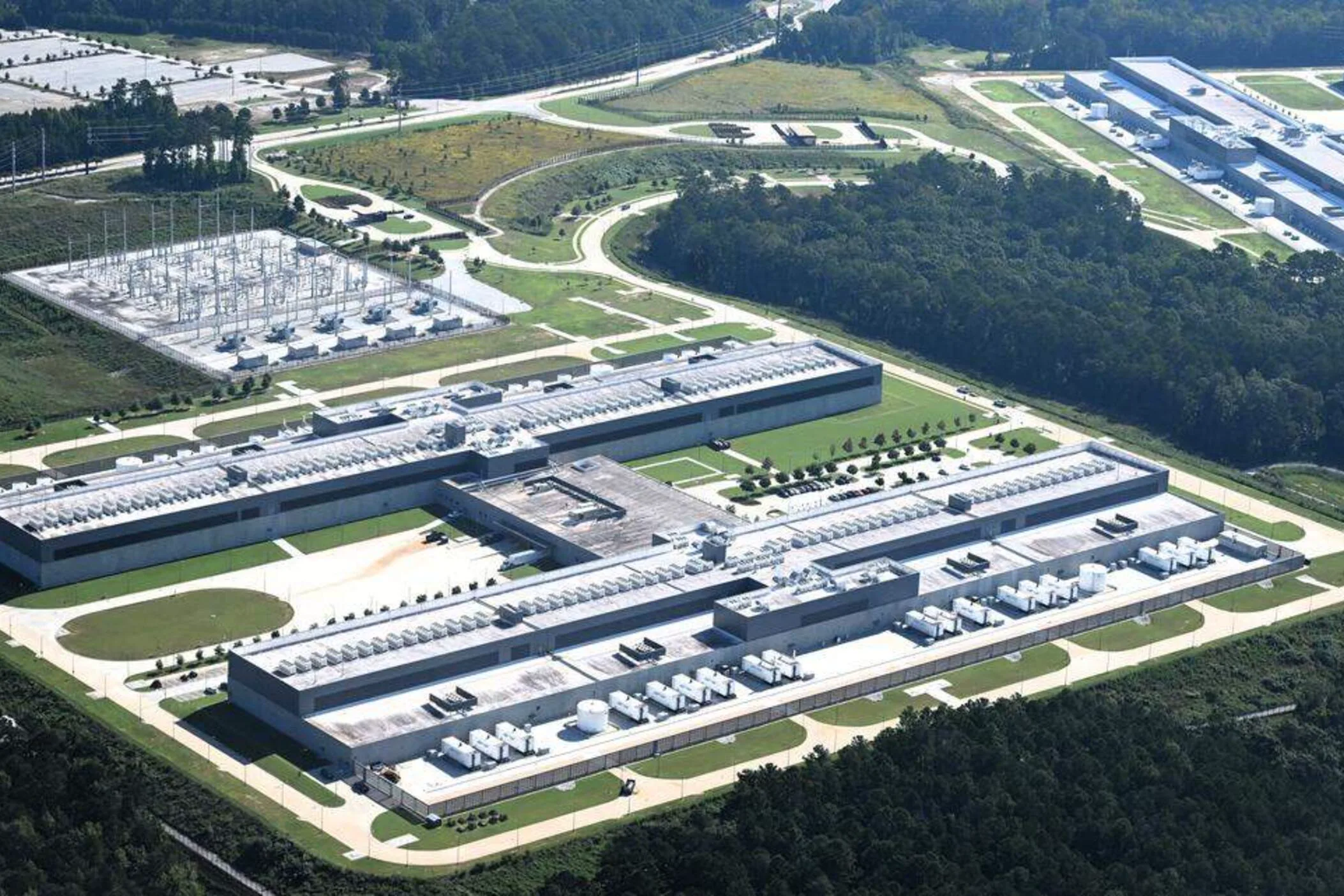
Across Appling, Evans, Jeff Davis, and Tattnall Counties, rising electricity costs have become one of the most pressing monthly expenses for working families, small business owners, and local farmers.
For retail customers of Georgia Power, recent regulatory decisions approved by the Georgia Public Service Commission (PSC) have created a documented increase of roughly $37 to $41 per month on typical residential bills.
For households served by local Electric Membership Corporations (such as Canoochee, Altamaha, or Satilla EMC), rates are established independently by local cooperative boards, though wholesale generation and transmission costs from Oglethorpe Power influence long-term cooperative budgets.
This analysis breaks down the documented regulatory math behind recent rate hikes, examines the long-term impact of Plant Vogtle, and explores the emerging statewide debate over commercial data centers.
1. The Numbers: Documenting Georgia Power’s Rate Decisions
To understand why electric bills have climbed, we must look at the specific regulatory proceedings decided by the Georgia Public Service Commission for Georgia Power between 2022 and 2025.
For a standard residential customer using 1,000 kilowatt-hours (kWh) of electricity per month, monthly bills increased across three primary regulatory mechanisms:
| Effective Date | Regulatory Proceeding & Docket | Primary Cost Driver | Monthly Impact (1,000 kWh Customer) | Cumulative Stacked Impact |
|---|---|---|---|---|
| January 1, 2023 | 2022 Base Rate Case Phase 1 (Docket 44280) | Grid modernization, operations, and inflation | +$3.60 / mo | +$3.60 / mo |
| June 1, 2023 | Fuel Cost Recovery (Docket 44999 / FCR-25) | Amortizing global natural gas under-recovery balance | +$15.94 / mo | +$19.54 / mo |
| August 1, 2023 | Vogtle Unit 3 Capital Recovery (Docket 29849) | Unit 3 commercial operation retail rate base inclusion (~5.8% base adjustment) | +$3.78 / mo | +$23.32 / mo |
| January 1, 2024 | 2022 Base Rate Case Phase 2 (Docket 44280) | Scheduled multi-year rate stabilization step | +$4.50 / mo | +$27.82 / mo |
| May 1, 2024 | Vogtle Unit 4 Capital Recovery (Docket 29849) | Unit 4 commercial operation retail rate base inclusion (~5% base adjustment) | +$8.95 / mo | +$36.77 / mo (Mid-2024 Total) |
| January 1, 2025 | 2022 Base Rate Case Phase 3 (Docket 44280) | Final multi-year base rate case phase | +$4.50 / mo | +$41.27 / mo (Final 2025 Total) |
The Cumulative Rate Math Explained
To understand how these figures combine, it is necessary to examine the timeline of when each rate took effect:
- As of Mid-2024 (When Vogtle Unit 4 Entered Commercial Service): A customer using 1,000 kWh was paying the first two base-rate steps ($3.60 + $4.50 = $8.10), the 2023 fuel adjustment ($15.94), and the combined Vogtle Units 3 and 4 retail additions ($3.78 + $8.95 = $12.73). Combined, these stacked decisions added exactly $36.77 per month to baseline bills compared to 2022.
- As of 2025 (Full Multi-Year Implementation): When the final step of the 2022 base rate case took effect in January 2025 ($4.50), cumulative structural increases reached $41.27 per month ($36.77 mid-2024 baseline + $4.50 final base step).
- The Bottom Line: For Georgia Power residential customers using 1,000 kWh, baseline electric bills rose by $36.77 per month by mid-2024, climbing to $41.27 per month in 2025, representing an increase of over 25% on standard bills before accounting for seasonal weather spikes or subsequent dockets (such as storm cost recovery following Hurricane Helene).
2. Plant Vogtle Units 3 & 4: Capital Costs and Ratepayer Recovery
The single largest capital project in Georgia utility history is the expansion of Plant Vogtle Units 3 and 4 near Waynesboro in Burke County.
When the two Westinghouse AP1000 nuclear reactors were certified by the PSC in 2009, total capital and construction costs across all four co-owners (Georgia Power, Oglethorpe Power, MEAG Power, and Dalton Utilities) were estimated at approximately $14 billion, with target completion dates in 2016 and 2017.
Because of complex engineering revisions, specialized supply chain shortages, and the 2017 bankruptcy of primary contractor Westinghouse, commercial operation was delayed by seven years. Total gross capital expenditures across all partners ultimately exceeded $35 billion.
Georgia Power’s Capital Share and the NCCR Financing Tariff
Georgia Power holds the largest ownership share at 45.7%. The utility’s initial capital construction estimate was approximately $6.1 billion (later revised to $7.3 billion), but final capital construction costs grew to approximately $10.7 billion.
Under the Georgia Nuclear Energy Financing Act of 2009 (SB 31), the legislature authorized the Nuclear Construction Cost Recovery (NCCR) tariff. This mechanism allowed the utility to collect financing costs (interest and return on equity) directly from retail ratepayers during construction, collecting approximately $2.1 billion before commercial operation.
The December 2023 Prudency Settlement
In December 2023, the Public Service Commission unanimously approved a stipulated settlement agreement (Docket 29849) that permanently bifurcated cost responsibility:
- $7.56 billion of Georgia Power’s capital construction costs was deemed prudent and approved for recovery through the retail rate base, earning an authorized return on equity over decades of operation.
- $2.63 billion in construction cost overruns was disallowed from retail recovery and absorbed entirely by parent company shareholders (Southern Company).
While Vogtle Units 3 and 4 now supply over 2,200 megawatts of carbon-free baseload electricity designed to run for up to 80 years, capital recovery costs remain a permanent component of monthly residential tariffs.
3. The Data Center Surge: Inquiries vs. Actual Electrical Demand
While Plant Vogtle brought substantial new energy online, Georgia’s future electricity forecasts shifted dramatically due to an unprecedented influx of commercial data centers.
In its 2022 Integrated Resource Plan (IRP), Georgia Power projected a modest 400 megawatts of load growth over seven years. However, in an extraordinary out-of-cycle October 2023 IRP update filed with the PSC (Docket 55378), Georgia Power reported that projected winter peak demand through 2031 had increased by 6,600 megawatts - an expansion over 17 times larger than its forecast just 18 months earlier (later revised upward to 8,500 megawatts in subsequent filings).
Regulatory filings and hearing testimonies confirmed that approximately 80% of this revised demand projection was driven by large-load commercial customers, particularly cloud computing and artificial intelligence server complexes. Because these facilities run 24/7/365, their continuous baseload demand has begun transitioning Georgia Power from a traditional summer-peaking utility into a dual-peaking or winter-peaking system.
Applications vs. Committed Power Load
Public discussion often references figures of 20 to 30 gigawatts of data center expansion in Georgia. It is essential to distinguish between speculative interest and active facilities:
- The Interconnection Queue: Technology developers have submitted preliminary interconnection and transmission study requests exceeding 20 to 30 gigawatts statewide. These represent speculative applications and “queue hoarding” by developers exploring multiple locations, not binding construction contracts.
- Operating Capacity: Active data center campuses currently operating in Georgia draw approximately 3,000 megawatts of power, with several gigawatts under formal construction or commercial contract.
Facility cooling engineering also creates a direct trade-off between water and power. While traditional evaporative cooling towers can consume millions of gallons of water daily during peak summer, newer closed-loop air-cooled systems use negligible water. However, air cooling incurs a higher “parasitic” electrical load, requiring significantly more grid electricity to cool the same volume of servers.
4. The Policy Debate: How Should Grid Expansion Be Paid For?
The central debate in Georgia energy policy is how the costs of building new power plants and high-voltage transmission lines to serve large industrial loads are divided among ratepayer classes.
When a large industrial customer connects to the grid, utilities must invest capital in both dedicated infrastructure (such as on-site substations) and shared system infrastructure (such as transmission corridors and generation reserves).
Arguments for Data Center Integration
Supporters of data center growth point out that large industrial users contribute significant revenue to the utility system:
- Fixed Cost Offsets: Proponents argue that large-load customers pay substantial industrial tariffs that contribute to fixed system costs, which can help moderate long-term rates for all customers.
- Local Tax Revenue: Data centers invest billions in equipment, significantly expanding local commercial property tax digests for host counties and school boards without adding students to local public schools.
Concerns Raised by Ratepayer Advocates
Consumer groups and regulatory staff emphasize that large industrial loads introduce long-term financial risks:
- Cost Shifting: If shared transmission and peaker plant investments are built to meet sudden industrial demand, residential ratepayers risk absorbing higher base rates if regulatory cost-allocation rules do not ring-fence those assets.
- Stranded Asset Risk: While data center microchips and server architectures become obsolete in 3 to 5 years, the power plants and transmission lines built to serve them carry 30-to-40-year depreciation lifespans. If commercial tech demand shifts or facilities relocate after initial contracts expire, captive residential customers could be left paying the remaining capital costs.
In regulatory orders issued in April 2024 and December 2025, the PSC approved agreements authorizing Georgia Power to procure new generation capacity (including 9,885 megawatts of generation and power purchase agreements) while instituting financial backstops. Under the High Load Factor (HLF) framework for customers exceeding 100 megawatts, developers are required to sign minimum demand ratchet charges (such as an 80% ratchet evaluated over trailing months), 10-to-15-year take-or-pay energy commitments, and parent-company financial surety bonds before construction begins. However, consumer advocates caution that these backstops expire after initial contract terms and do not permanently insulate captive customers from long-term asset depreciation.
5. Legislative Scrutiny: House Bill 1192 and the Gubernatorial Veto
During the 2024 legislative session, lawmakers examined whether state tax incentives should continue subsidizing data center construction while power supplies tightened.
Under O.C.G.A. § 48-8-3(68.1), Georgia provides a state sales-and-use tax exemption on computer hardware and infrastructure equipment for qualifying high-technology data centers. The General Assembly passed House Bill 1192, which proposed a two-year pause on issuing new tax exemption certificates under this statute while establishing a legislative Energy Planning and Infrastructure Study Committee.
The bill passed the House by a vote of 96 to 71 and the Senate by 29 to 22.
The Governor’s Veto Rationale
On May 7, 2024, Governor Brian Kemp vetoed HB 1192. In his official veto message, the governor cited two primary justifications:
- Contractual Reliance & Business Predictability: The General Assembly had recently voted in 2022 to extend the sunset date of the § 48-8-3(68.1) exemption through December 31, 2031. Abruptly suspending the program just two years later would disrupt multi-million-dollar capital investments already in progress that relied on enacted state tax law.
- Economic Competitiveness: The veto maintained Georgia’s competitive posture against neighboring states (such as Virginia, North Carolina, and Texas) actively recruiting digital and technology investments.
Supporters of the legislation argued that continuing hundreds of millions of dollars in state sales tax exemptions for highly automated facilities placed an unfair burden on ordinary taxpayers who pay full state sales taxes on household purchases.
6. Potential Implications for District 157
The economic equation for Georgia House District 157 (Appling, Evans, Jeff Davis, and Tattnall Counties) differs substantially from the urban counties hosting massive data complexes.
- Employment Realities: A modern $2 billion data center facility creates roughly 1,000 to 1,500 temporary construction jobs, but permanent operational staffing typically stabilizes at only 30 to 60 specialized technical and engineering positions once open.
- Regional Grid Realities: Because District 157 is part of the interconnected Georgia power grid, statewide capital expenditures for generation and high-voltage transmission influence long-term wholesale power costs across rural Southeast Georgia, even if local counties do not host server campuses.
7. Micah King’s Utility Ratepayer Protection Platform
Micah King has made household affordability and utility accountability central to his legislative campaign for Georgia House District 157.
Drawing from his background as an Accredited Financial Counselor (AFC®), King has proposed three concrete legislative reforms:
1. Statutory Ring-Fencing for Large-Load Commercial Users
- Current Regulatory Framework: The PSC regulates industrial customer contracts through individual tariff dockets and multi-year stipulations.
- King’s Proposal: King proposes legislation requiring commercial customers with continuous load requirements exceeding 100 megawatts to enter statutory capital agreements. These agreements would require developers to fund 100% of their dedicated transmission, substation, and reserve power infrastructure, backed by financial surety bonds to ensure residential customers are never responsible for stranded capital assets.
2. Restoring the Independent Consumers’ Utility Counsel
- Current Regulatory Framework: Consumers are currently represented before the PSC by public interest advocacy staff, but Georgia lacks an independent consumer advocate office. The original Consumers’ Utility Counsel was eliminated during 2008 state budget reductions. Legislation to revive the office (such as Senate Bill 94) has been introduced in the General Assembly.
- King’s Proposal: King supports passing legislation to re-fund the Consumers’ Utility Counsel (CUC). Re-establishing the CUC would provide dedicated legal, engineering, and financial experts to cross-examine utility filings strictly on behalf of residential and small commercial consumers during base-rate cases and other PSC proceedings.
3. Fair Net Metering for Rural Solar and Agriculture
- Current Regulatory Framework: Georgia Power’s retail net-metering pilot program was capped at 5,000 customers (approximately 50 megawatts) and filled quickly. New solar customers are placed on “instantaneous netting,” where excess daytime solar is credited at the utility’s wholesale avoided-cost rate (typically 3 to 4 cents per kWh), while evening electricity is purchased at the full retail rate (around 13 to 15 cents per kWh), making standalone solar financially difficult without expensive battery systems.
- King’s Proposal: King advocates for raising the net-metering cap, allowing rural homeowners, poultry growers, and timber mills that install on-site solar to receive fair monthly netting credits for excess energy returned to the grid.
“When working families sit down at the kitchen table to review their monthly bills, electricity is a major expense,” King stated. “New technology is important for Georgia’s future, but state policy must ensure that everyday families and small businesses are treated fairly and protected from carrying the infrastructure costs of commercial tech developments.”
Related District 157 Resources
- Review where both candidates stand on utilities and economic development in our District 157 Candidates Guide.
- Read our statewide facility directory in the Georgia Data Centers Map & Directory.
- Check your county early voting hours and locations in the District 157 Early Voting Guide.
Tracking Utility Bills, Property Taxes & Living Costs
Get independent briefings on state tax reform, rising power rates, and what Georgia lawmakers are doing to lower everyday household costs in rural communities.
You're on the list!
Check your inbox for a quick welcome note from Micah. We're glad to have you with us on the trail.
✓ Direct trail updates & voter guides across Appling, Evans, Jeff Davis & Tattnall. No consultant spam. Unsubscribe anytime.

Micah King
Candidate for Georgia House of Representatives District 157 representing Tattnall, Jeff Davis, Appling, and Evans counties.