The Hidden Pressures on District 157: ER Shortfalls, Trade Fees, and Harvest Season

As the first week of September draws to a close, families across Tattnall, Evans, Appling, and Jeff Davis counties are stepping into one of the busiest seasons of the year. Our row-crop farmers are harvesting peanuts and cotton, timber crews in Baxley and Hazlehurst are hauling pine, and our high schools and technical colleges are launching a new academic year.
Southeast Georgia is defined by hard work and community pride. Yet as we look across District 157 this fall, working families and small business owners are navigating significant economic headwinds: rising operational expenses on our farms, out-of-pocket costs for technical trade students, and a quiet crisis threatening our rural emergency rooms.
To keep our communities strong, we must look honestly at these challenges and champion practical solutions in Atlanta.
1. The 2026 Fall Harvest: Resilience on the Family Farm
Agriculture is the economic heartbeat of District 157. Across Georgia, planted cotton acreage rose to one million acres this year, while peanut acreage adjusted to 720,000 acres. This careful rotation is essential to maintaining local gins, warehouses, and equipment providers across Southeast Georgia.
Our local growers have weathered a difficult production year. Dry spring weather gave way to heavy May rains, followed by extreme summer heat in late July and August that placed intense stress on crops during peak bloom. Despite these conditions, early peanut yields are showing encouraging strength, with state averages projected to exceed 4,000 pounds per acre.
Meanwhile, seedbed preparation is underway in Tattnall and Toombs counties for the 2027 Vidalia sweet onion crop, an industry that generates over $150 million annually for our regional economy. In Appling and Jeff Davis counties, commercial forestry and local facilities like the Interfor lumber mill in Baxley continue to support high-wage manufacturing jobs, while Claxton Poultry in Evans County supports more than 1,000 local farm families.
However, gross harvest numbers do not tell the full story. Operating a family farm in 2026 remains exceptionally expensive. While the recent adjustment of the H-2A guest worker wage rate to $10.80 per hour offers modest relief, high fuel prices, equipment maintenance, and rising base electricity rates for irrigation pumps continue to compress net farm income.
2. Technical Trades: Bridging the Rural Workforce Gap
Economic growth in District 157 depends on providing our young people with clear, high-paying career paths right here at home.
Local high schools are stepping up. Appling County High School now offers 14 distinct CTAE (Career, Technical, and Agricultural Education) pathways, allowing students to earn recognized industry credentials before graduation. In Jeff Davis and Tattnall counties, local businesses and philanthropic groups are funding scholarships to help trade students pursue vocational careers.
At the post-secondary level, Southeastern Technical College in Vidalia and Swainsboro and Ogeechee Technical College are training the next generation of skilled workers. Programs in diesel mechanics, welding, and practical nursing boast job placement rates near 99%. Ogeechee Tech even introduced 5:00 a.m. welding classes to allow working adults to earn certifications without quitting their daytime jobs.
However, financial barriers remain. While state HOPE Career Grants cover base tuition for high-demand programs like Commercial Truck Driving (CDL), students are still responsible for nearly $650 in non-tuition fees, fuel surcharges, DOT physicals, and specialized drug screenings. For many working families, these out-of-pocket fees prevent talented individuals from completing their credentials.
3. The Rural Healthcare Crisis: ER Shortfalls and Price Transparency
The most urgent challenge facing District 157 is the financial instability and operational uncertainty of our rural healthcare network. Local hospitals are not only life-saving medical centers; they are major employers and essential prerequisites for local economic investment.
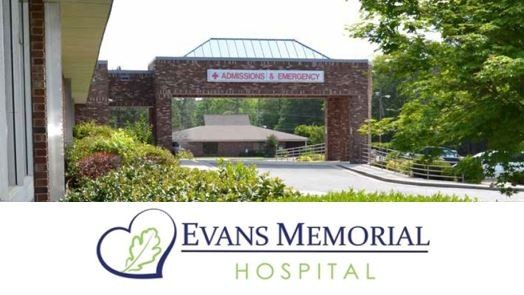
In Claxton, Evans Memorial Hospital is confronting a projected $3.3 million budget shortfall this year, forcing hospital leadership to evaluate the potential closure of its Intensive Care Unit (ICU). This comes after the hospital was forced to end labor and delivery services in 2010 due to financial strain. Today, Appling, Evans, and Jeff Davis counties are officially classified as maternity care deserts, forcing expectant mothers to travel over an hour for labor and delivery care.
Compounding this financial strain is a critical transparency issue. A recent investigative report by The Georgia Virtue revealed that federal regulators issued formal warning notices to 16 hospitals across Georgia, including both Evans Memorial Hospital in Claxton and Jeff Davis Hospital in Hazlehurst, for failing to publish machine-readable price transparency data online.
Failure to comply with federal price transparency rules carries potential penalties of up to $2 million. For rural hospitals already operating on razor-thin margins, risking multi-million-dollar fines while keeping patients in the dark about procedure costs hurts working families and taxpayers alike. True healthcare reform requires state investment, but it also demands total pricing transparency so patients are not blindsided by surprise medical bills.
If an industrial accident occurs at a local sawmill, poultry processing plant, or farm, the loss of local ICU beds directly impacts worker safety. Furthermore, expanding businesses will not relocate to communities where emergency medical care is compromised. Stabilizing rural health funding and demanding pricing transparency are urgent economic priorities.
Actionable Legislative Solutions for District 157
As candidate for Georgia House District 157, I believe we must address these issues with specific legislative action:
- Protect Rural Utility Ratepayers and Expand Farm Land Protections: Enact strict legislative caps to ensure that multi-billion-dollar energy grid expansions for out-of-state data centers are not shifted onto rural residential and agricultural power bills. Expand the Conservation Use Valuation Assessment (CUVA) acreage limits to protect family farms from excessive property tax reassessments.
- Reinvest in Rural Hospitals and ICU Preservation: Fully draw down available federal healthcare offsets and rural hospital stabilization grants to cover uncompensated care costs, keeping emergency rooms and ICUs open in communities like Claxton, Baxley, and Hazlehurst.
- Cover Ancillary Fees for Technical Trade Students: Amend the HOPE Career Grant to cover mandatory testing, lab fees, and fuel surcharges for CDL and trade students who commit to working in rural Georgia for two years post-graduation.
- Enforce Hospital Price Transparency: Hold healthcare facilities accountable to state and federal price transparency rules so working families know procedure costs upfront, while helping rural hospital boards maintain compliance to avoid self-inflicted $2 million federal fines.
By supporting our farmers, investing in our trade students, protecting our local emergency rooms, and demanding fair healthcare pricing, we can keep District 157 strong, independent, and prosperous for generations to come.

Micah King
Candidate for Georgia House of Representatives District 157 representing Tattnall, Jeff Davis, Appling, and Evans counties.